Are Black Widows Active in Phoenix Right Now?
Black widows are still active in Phoenix homes in February, but they’re usually tucked into warm, low-traffic areas. As spring approaches and temperatures rise, activity becomes more noticeable.
How Active Are Black Widows Right Now in Phoenix (Early February)?
Early February in Phoenix is usually a “lower activity” time compared to late spring and summer—but black widows can still be present.
Here’s what “lower activity” typically looks like for homeowners:
- Fewer visible spiders in open areas because cooler nights reduce overall outdoor pest movement.
- More sightings during “disturbance moments” (cleaning the garage, moving storage bins, reorganizing patio furniture, pulling items off shelves).
- More activity in protected microclimates that stay warmer and undisturbed, like garages, storage rooms, block wall voids, and covered patios.
Important Phoenix detail: even when outdoor activity slows, many homes still have enough warmth, irrigation, and insect prey around the property for spiders to hang around the right harborage spots.
What Changes as We Move Into Spring (Late February Through May)?
As temperatures rise, black widow encounters tend to increase—mainly because:
- Insects become more active (more food for spiders)
- Outdoor living increases (people use patios, pool areas, yards more often)
- Nighttime activity becomes more noticeable as warm evenings return
A practical way to think about it in Phoenix:
- Late February–March: you may start noticing more “supporting pests” (crickets, roaches, other insects). If those increase, spiders often follow.
- April–May: more homeowners encounter spiders around patios, pool equipment, and block walls—especially where clutter and debris create shade and hiding spots.
If you’re already seeing black widows now, spring is the right time to tighten up prevention before activity ramps.
Where Black Widows Hide Around Phoenix Homes
Black widows prefer dark, quiet, low-traffic spaces where they can build messy webs and stay protected.
Outside (Most Common)
- Under and behind patio furniture (especially rarely moved pieces)
- Inside or beneath grills and outdoor cabinets
- Around pool equipment, hose bibs, irrigation valves, and other tucked-away utility areas
- Under planter lips, stacked pavers, and decorative yard items
- In woodpiles and beneath scrap lumber
- Along block walls, especially where debris collects
Garage and Storage Areas (Hot Spots)
Garages are one of the most common places Phoenix homeowners report widow sightings because they offer shade, clutter, and easy hiding.
Check:
- Behind stored items on garage shelving
- Under cardboard boxes and clutter piles
- Inside rarely used sports gear bins, coolers, and storage totes
- Around workbench corners and behind pegboards
Indoors (Less Common, but Possible)
- Utility areas and quiet corners where insects may be present
- Behind seldom-moved items (storage closets, laundry corners)
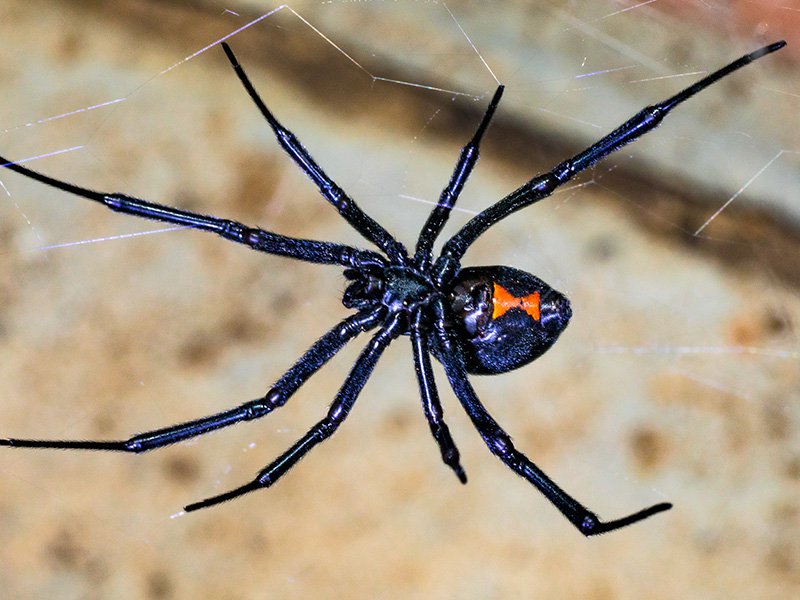
Check out our black widow spider guide to learn how to spot red hourglass markings and the messy, irregular webs they build in quiet areas.
How to Avoid Encounters With Black Widows
These steps reduce both spiders and the insects that attract them.
1) Stop “Blind Reaches” Immediately
This is the #1 habit change that reduces bite risk:
- Put on gloves before moving stored items.
- Use a flashlight in dark corners.
- Avoid grabbing the underside of patio furniture, rims of planters, or the back side of stored bins without looking.
2) Do a 10-Minute “Widow Sweep” in the Right Zones
Focus on:
- Covered patios
- Garage shelving corners
- Around grills and pool equipment
- Woodpiles and block wall edges
If you find webs, treat them like a sign to keep inspecting—webs often show you where the spider has been spending time.
3) Reduce Their Food Source (Insects)
Black widows follow prey. If crickets and roaches are active around your home, spiders have a steady food supply.
Good next steps:
- Reduce outdoor clutter and debris
- Keep doors sealed (worn door sweeps are a common entry point)
- Address moisture and harborage areas
- Implement a home pest control plan
4) “Spring-Proof” Your Yard Now (Before Activity Climbs)
Pick 2–3 of these and you’ll usually see a real difference:
- Keep firewood elevated and a few feet away from the home
- Pull stored items away from the foundation line (even 12–18 inches helps)
- Trim vegetation off walls and away from entry points
- Keep leaf litter and debris from collecting along block walls
When Repeated Sightings Mean It’s Time for Ongoing Protection
Seeing one black widow doesn’t automatically mean you have a major problem. But repeated sightings in garages, patios, block wall areas, or near play spaces usually signal something bigger: steady insect activity and undisturbed hiding spots around the home.
This is where ongoing pest control makes a real difference—not just by addressing spiders, but by reducing the insects that keep them around in the first place.
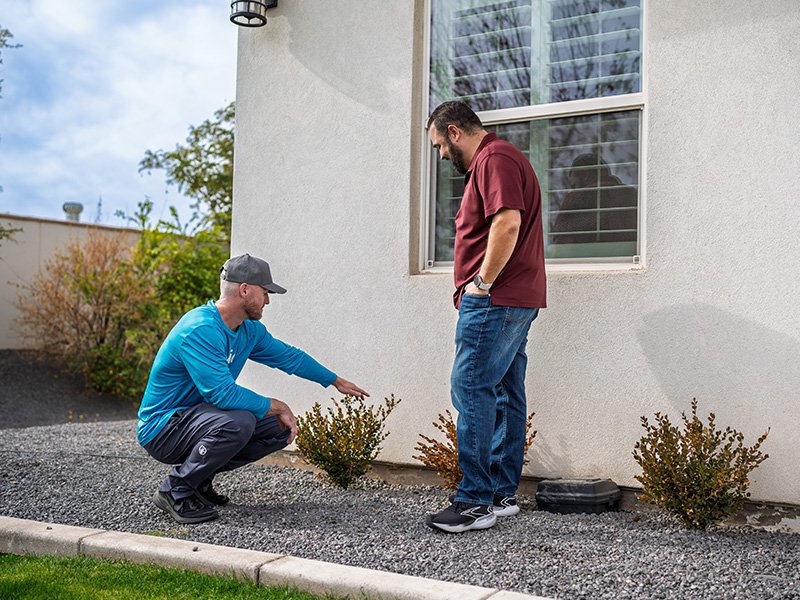
At Termio, our Phoenix-area service focuses on:
- Reducing crickets, roaches, and other spider food sources
- Treating garages, patios, block walls, and utility areas where black widows tend to settle
- Helping homeowners stay ahead of seasonal increases as spring approaches
We regularly help homeowners in Queen Creek and across Phoenix and surrounding East Valley communities tighten up spider pressure before activity spikes in late spring.
If black widows keep showing up around your home, a routine plan can provide consistent protection instead of reacting each time you spot one.
Learn more about Termio’s home pest control services or contact our team if you’d like help getting ahead of spider season.
Arizona Pests Found in the Same Areas as Black Widows
Not every dark spider you see around your home is a black widow, but some Arizona pests tend to show up in the same quiet, hidden spaces.
Homeowners in the Phoenix metro often encounter:
- Wolf spiders: Larger, fast-moving spiders that don’t build messy webs and are often mistaken for something more dangerous
- American cockroaches: Outdoor-leaning roaches that favor garages, block walls, irrigation areas, and patios, and serve as a common food source for spiders
- Arizona bark scorpions: Another type of arachnid frequently found in garages, block walls, storage areas, and patios where black widows may also hide
If you’re unsure what you’re seeing, avoiding direct contact and getting a proper ID is the safest move.
If You Suspect a Bite: When to Get Medical Help
Most sightings aren’t emergencies—but bites should be taken seriously.
If you think a black widow bit you, seek medical care promptly (and you can contact Poison Control in the U.S. at 1-800-222-1222).
How to Stay Ahead of Black Widows This Spring
Black widow activity may be lower in early February, but warm, undisturbed areas around the home can still support spiders—especially garages, covered patios, block walls, and storage spaces.
As spring approaches, increased insect activity often leads to more encounters, particularly around patios, utility areas, and other low-traffic outdoor spaces.
Addressing clutter, inspecting known hiding spots, and reducing insect activity now helps limit surprises and prevent problems from escalating later in the season.
If you’d like help identifying activity around your home or staying ahead of black widows and other pests this spring, Termio can help with proactive pest control tailored to Phoenix.