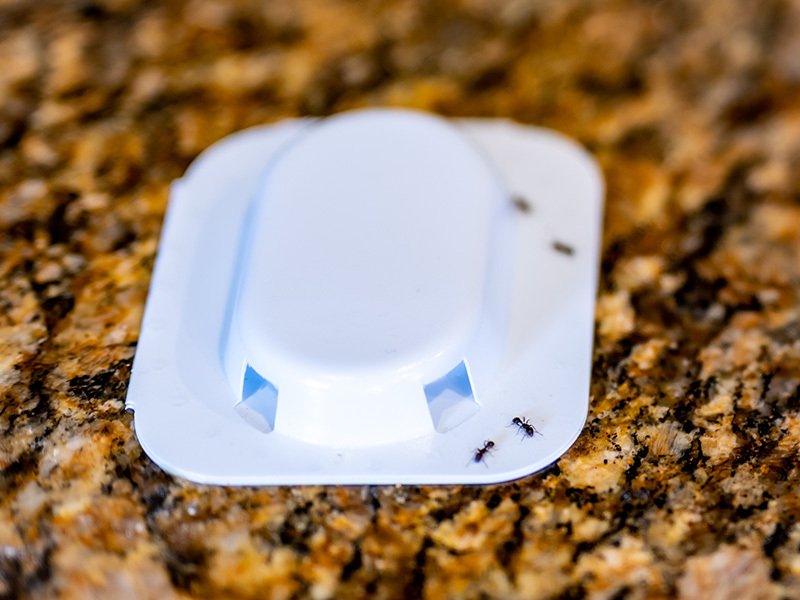
Why Ants Show Up in Spring in Phoenix
Spring in the Valley creates ideal conditions for ant activity:
- Temperatures warm up
- Landscape irrigation systems begin running again
- Outdoor food sources increase
- Colonies expand their foraging range
When this happens, ants start exploring nearby structures—including homes—for water, sugar, and shelter.
Several species are especially common around Phoenix homes, including:
- Pavement ants, which nest in concrete cracks and sidewalks
- Odorous house ants, which often track moisture and show up around sinks and plumbing
- Little black ants, which are attracted to sweet foods and kitchens
If you’re trying to identify what you’re seeing, Termio has guides on these pests and other ant species in our Pest Learning Center.
For quicker identification and to eliminate ants from your home, request an ant quote now!
The 7 Entry Points Ants Use Most in Phoenix Homes
1. Front Door Gaps and Exterior Door Thresholds
Even a small gap under your front door can become an ant highway—especially if there’s nearby landscaping, irrigation, or a block wall.
What to check
- Daylight visible under the door
- Worn door sweeps
- Cracks where the threshold meets the slab
What to do
- Replace worn door sweeps or weather stripping
- Re-caulk gaps around the threshold
- Shake out and clean doormats regularly
2. Sliding Glass Doors and Patio Tracks
Sliding door tracks collect dust, plant debris, and sometimes moisture—exactly the kind of environment ants like.
What to check
- Dirt and debris inside tracks
- Small gaps at frame corners
- Worn weather stripping
What to do
- Vacuum patio tracks weekly during spring
- Replace worn weather stripping
- Seal cracks where the frame meets stucco
3. Window Frames and Stucco Micro-Cracks
Phoenix homes experience constant expansion and contraction from heat, which can create tiny cracks around windows and stucco.
What to check
- Hairline cracks around window corners
- Gaps where trim meets stucco
- Loose window screens
What to do
- Seal gaps with exterior caulk
- Repair damaged screens
- Trim vegetation touching windows
4. Plumbing Penetrations Under Sinks
If ants are appearing near sinks, tubs, or laundry rooms, the cause is often plumbing entry points.
What to check
- Gaps where pipes enter the wall
- Holes in cabinet floors around plumbing
- Signs of moisture or slow leaks
What to do
- Seal pipe gaps with caulk or foam
- Fix leaks quickly
- Store pet food in sealed containers
Moisture is especially attractive to ants in Phoenix’s desert climate.
5. Garage Door Seals and Corners
Garage corners are a classic entry point, particularly if you store:
- Pet food
- Cardboard boxes
- Bird seed
- Extra pantry items
What to check
- Worn garage door bottom seals
- Gaps in the corners
- Cracks between the slab and wall
What to do
- Replace damaged bottom seals
- Seal slab cracks where possible
- Store food in sealed containers
6. Foundation Cracks and Expansion Joints
Many ant infestations start outside in concrete cracks before ants move indoors.
Pavement ants commonly nest in:
- Sidewalk cracks
- Patio joints
- Expansion joints along foundations
What to check
- Cracks in concrete near the home
- Patio expansion joints
- Settlement cracks near steps or porches
What to do
- Seal large exterior cracks
- Adjust irrigation so water doesn’t pool near the foundation
- Keep soil and mulch away from the home’s siding
7. Utility Line Entry Points
Utility penetrations are often overlooked but provide direct access into wall voids.
Common examples include:
- AC refrigerant lines
- Cable and internet lines
- Electrical conduits
- Irrigation controller wiring
What to check
- Gaps around line entry points
- Exterior outlet boxes
- Conduit openings
What to do
- Seal openings with exterior-rated sealant
- Inspect these areas each spring and during monsoon season
Quick Checklist: What to Do if You See Ant Trails
If ants have already made their way inside, start with these simple steps:
1. Remove attractants
- Wipe counters and floors
- Store sweets and pet food in sealed containers
2. Follow the trail
- Ant trails often lead back to the entry point
3. Seal accessible gaps
- Doors, plumbing openings, and garage corners are common spots
4. Avoid relying on random sprays
- Spraying visible ants may kill a few but leave the colony untouched
5. Monitor activity for a few days
- If trails return quickly, the colony is likely nearby.
When to Call a Professional for Ants in Phoenix
You may want professional help if:
- Ants appear daily for more than a week
- Trails disappear and reappear in different rooms
- Multiple ant species are present
- Ant activity seems connected to hidden moisture
At Termio, our technicians start with a detailed inspection of the structure, foundation, and landscaping to identify how ants are getting inside and where colonies are likely located.
From there, we build a treatment plan that targets the colony while also addressing the conditions that attract ants in the first place—so the problem doesn’t keep repeating every spring.
Phoenix Homeowners: Stay Ahead of Spring Ant Activity
Because ant colonies remain active most of the year in the Valley, many homeowners choose ongoing home pest control to keep ants and other pests under control all year long.
If ants have become a recurring issue in your home, our team can help.
Schedule an inspection with the Termio team today.
Related Ant Resources From Termio
- Do I Need Pest Control If I Only See A Few Ants?
- Seeing Ants? Here’s What You Need To Know In Queen Creek And Phoenix
- Ants In The Kitchen? Why Summer Is Primetime For Infestations
- Do You Know The Difference Between Carpenter Ants And Termites?
Family note: If anyone in your home has sensitivities (asthma, allergies, small children, pets), focus first on sealing entry points and reducing attractants, and talk to a professional about the safest treatment approach for your household. Termio’s team uses an Integrated Pest Management approach—meaning we emphasize inspection, targeted treatment, and prevention so you can protect your home without overdoing it.